After a crash or serious injury, people usually know they are hurting. What they do not always know is what evidence helps a personal injury claim and what can quietly weaken it. Insurance companies move fast, and they look for gaps, delays, and inconsistencies they can use to pay less.
A strong claim is not built on one dramatic piece of proof. It is built on a body of evidence that shows how the incident happened, who caused it, how badly you were hurt, and what those injuries have cost you. The more clearly those pieces fit together, the harder it is for an insurer or defense lawyer to argue around the facts.
What evidence helps a personal injury claim most?
The best evidence usually falls into four categories: proof of liability, proof of injury, proof of financial loss, and proof of how your life changed after the accident. Some cases are straightforward. Others turn on small details, like a timestamp on a photo or a note in a medical chart. That is why early action matters.
In a Mississippi personal injury case, useful evidence often includes accident scene photographs, video footage, police reports, witness statements, medical records, bills, employment records, and documentation of ongoing pain or limitations. Not every case will have all of these. But the stronger the documentation, the stronger the claim.
Evidence that shows how the accident happened
The first fight in many injury cases is over fault. If the other side can muddy the facts, they gain leverage. That is why evidence from the scene is so important.
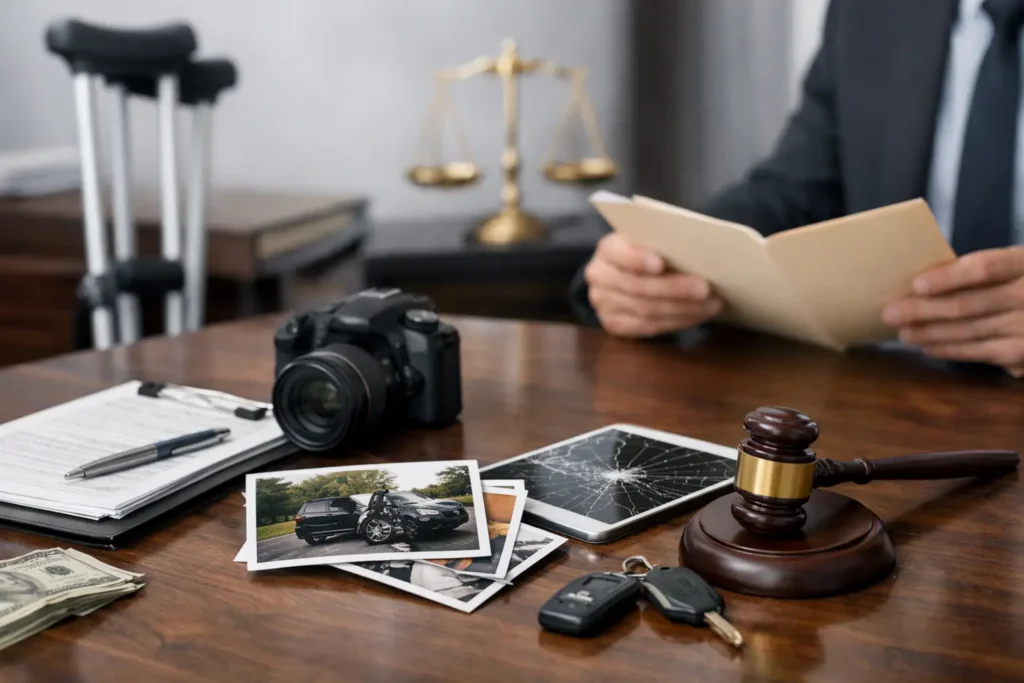
Photos and videos taken right after the incident can be powerful. In a car wreck, images of vehicle damage, skid marks, debris, road conditions, weather, traffic signals, and visible injuries can tell a story before anyone has had time to reshape it. In a slip and fall or premises liability case, pictures of the hazard itself matter just as much. A wet floor, broken step, poor lighting condition, or missing warning sign may not stay the same for long.
Police reports can also help, although they are not the final word. A report may identify the parties, note where the crash happened, include witness names, and record an officer’s observations. Sometimes it references citations or contributing factors. Insurance companies often look to the report early, even though it can contain mistakes or leave out critical details.
Witness statements are another key piece. Independent witnesses can be extremely persuasive because they usually have no stake in the outcome. The value of a witness depends on what they actually saw, how consistent they are, and how soon their statement was gathered. Memories fade fast. Waiting can cost you.
In some cases, video footage becomes the turning point. Traffic cameras, dashcams, business surveillance, or doorbell cameras may capture the event or the moments leading up to it. The problem is that video is often erased quickly. If there is a chance footage exists, it should be identified and preserved as soon as possible.
Medical proof is often the backbone of the claim
If liability is one side of the case, medical evidence is the other. You must be able to show not only that you were injured, but that the injury was caused by the incident and required real treatment.
Medical records matter because they create a timeline. Emergency room records, ambulance reports, urgent care notes, hospital charts, imaging studies, surgical records, physical therapy notes, and follow-up evaluations can all help show the nature and extent of your injuries. These records may document pain complaints, physical findings, diagnoses, treatment recommendations, and restrictions on work or daily activity.
Consistency matters here. If you wait too long to get treatment, the insurance company may argue you were not seriously hurt. If you skip appointments, they may say you got better quickly or failed to take your recovery seriously. If your symptoms change over time, that does not automatically hurt your case, but the records need to make sense. Gaps and contradictions create openings for the defense.
Medical bills are also important, but they are only part of the picture. Bills help establish the financial impact of the injury. Records explain why those charges were incurred. One without the other is less persuasive.
What if you had a preexisting condition?
That does not mean you have no case. Many injured people already have back problems, bad knees, prior surgeries, or chronic pain. The real question is whether the accident made your condition worse or caused a new injury on top of an old one.
This is where careful medical documentation matters. If your records show a meaningful change in symptoms, function, or treatment needs after the incident, that can support the claim. The defense will often try to blame everything on your prior condition. A well-prepared case draws the line between what was there before and what the accident changed.
Financial records help prove the true cost
A personal injury claim is not only about what happened on the day of the accident. It is also about what that harm has cost you since then.
Lost wage documentation can include pay stubs, tax records, employer letters, attendance records, or disability paperwork. If you missed work for appointments, recovery, surgery, or physical restrictions, that time should be documented. If your injuries reduced your hours, changed your duties, or affected your future earning capacity, those losses may also matter.
Out-of-pocket expenses can support the claim as well. Prescription costs, medical equipment, travel for treatment, home care assistance, and other injury-related expenses can add up. The key is keeping receipts and records that connect those expenses to the injury.
Property damage evidence can also help in vehicle collision cases. Repair estimates, photographs, total loss valuations, and damage reports can support the overall narrative of impact. While vehicle damage does not always line up perfectly with physical injury, insurers often use property damage to argue about force and severity. That is one reason this part of the file should not be ignored.
Your own documentation can strengthen the case
One part of the claim that people often overlook is their own day-to-day experience. Pain, limitations, lost sleep, missed family activities, and emotional strain do not always show up fully in a billing statement.
A journal can help document how the injury affects your daily life. It does not have to be dramatic. In fact, simple and honest notes are often better. Record your pain levels, mobility problems, missed work, trouble driving, interrupted sleep, emotional changes, and activities you can no longer do normally. If you were active before the accident and now struggle with ordinary tasks, that change matters.
Photographs of visible injuries and recovery stages can also be useful. Bruising, swelling, scarring, casts, mobility aids, and surgical recovery often become less visible over time. Early photos may preserve details that later disappear.
There is a warning here, though. Be careful with social media. Insurance companies and defense lawyers look for posts, pictures, and comments they can use against you. Even an innocent photo can be twisted into an argument that you were not badly injured. The safer move is to stay off social media or be extremely cautious while your claim is pending.
What can hurt your case even if you were genuinely injured?
Good claims can still be damaged by preventable mistakes. Delayed treatment is a common one. So is giving a recorded statement to the insurance company before you understand your injuries. Another problem is failing to preserve evidence, especially when vehicles are repaired, dangerous conditions are cleaned up, or surveillance footage is deleted.
Inconsistent statements can also create trouble. If what you told the officer, your doctor, your employer, and the insurer does not match, the defense will focus on that. Minor differences happen. Major contradictions can be costly.
It also matters how your case is investigated. Some evidence has to be requested. Some has to be demanded before it disappears. Some requires deeper work, such as interviewing witnesses, securing business records, analyzing trucking logs, or reviewing phone data after a serious crash. That is where prompt legal action can make a real difference.
What evidence helps a personal injury claim in serious or disputed cases?
The more severe the injury or the harder the fight over fault, the more important detailed evidence becomes. In trucking cases, for example, evidence may include driver logs, black box data, maintenance records, inspection reports, dispatch communications, and company safety records. In wrongful death claims, the case may also involve medical experts, accident reconstruction, and proof of the family’s financial and emotional loss.
These cases are rarely won by waiting to see what the insurance company decides to do. They are built by securing evidence early, understanding what is missing, and pushing back before the other side controls the story.
If you are hurt and wondering what to keep, the answer is simple: keep more than you think you need. Save records, take photos, follow treatment, and get legal help before key evidence disappears. At Ballard Law, PLLC, that is the kind of pressure we are prepared to take off your shoulders so you can focus on healing while your case is built the right way.