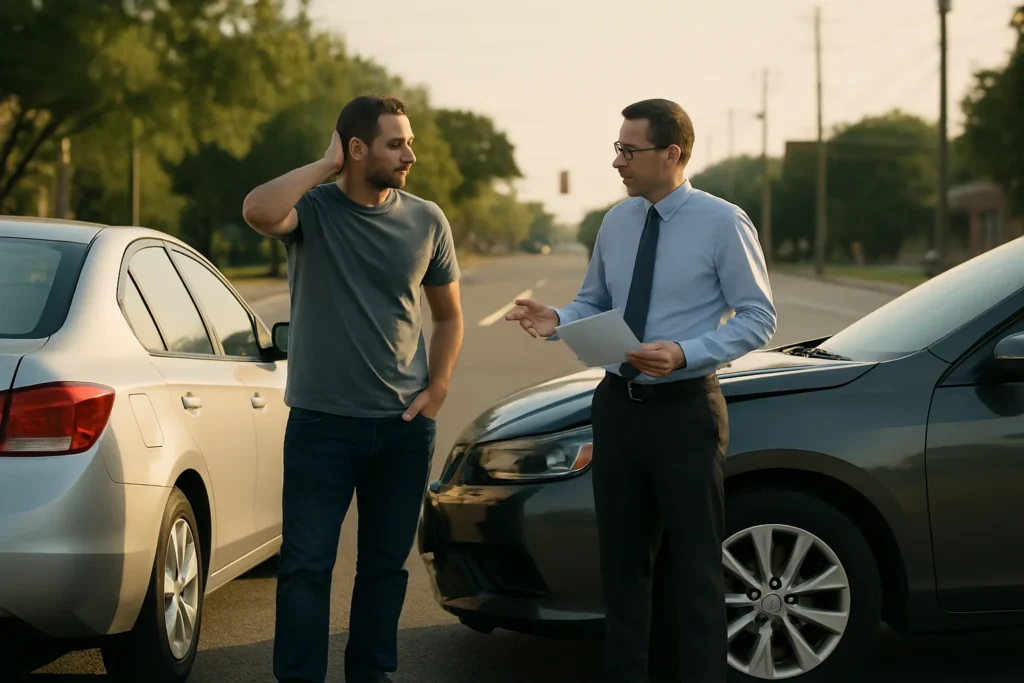
A rear-end crash can seem simple: one vehicle strikes the back of another, so the following driver must be responsible. Often, a driver who follows too closely, drives too fast for conditions, or fails to stop safely may be found negligent. But rear-end collision fault in Mississippi is not automatic simply because one vehicle hit another from behind.
The full sequence matters. Did the lead vehicle stop suddenly without a reasonable traffic-related explanation? Did it change lanes unsafely? Were the brake lights working? Was there a chain reaction involving several vehicles? Do the photographs, damage patterns, witnesses, and vehicle data support the same account? These questions can be important when someone asks, “I was rear-ended in Jackson, MS—who is at fault?”
Ballard Law helps Mississippi accident victims understand the evidence and legal issues that may affect a claim. This article explains when the usual rear-end assumption may be challenged, how fault can be evaluated, and what to document when the other driver disputes the sequence of events. For broader context about whether you can sue after a rear-end collision, readers can review Ballard Law’s related resource.
Why Rear-End Collision Fault in Mississippi Is Not Always Automatic
A rear driver has a duty to operate at a reasonable speed, maintain an appropriate following distance, and respond to traffic conditions. A collision from behind may provide useful evidence that the rear driver failed to meet that duty. It does not, however, answer every question about causation or shared responsibility.
The importance of the complete sequence
Investigators, insurers, and attorneys may examine what happened during the moments before impact. A vehicle may have been slowing normally, stopping for traffic, or already stopped when it was struck. In other cases, the lead driver’s conduct may have contributed to the crash. For example, evidence may raise questions about an abrupt stop unrelated to traffic, an unsafe lane change directly in front of another vehicle, or a failure to use functioning brake lights.
This does not mean that every sudden stop makes the front driver responsible. A driver may need to stop because of congestion, a pedestrian, road debris, an emergency vehicle, or another legitimate hazard. The issue is generally whether the conduct was unreasonable under the circumstances and whether it contributed to the collision.
Multiple impacts create additional questions
In a chain-reaction crash, the first impact may push a vehicle into another car, or a later impact may cause damage that obscures the original sequence. Each driver’s position, speed, stopping distance, and point of impact may matter. A police report can be useful, but it may not contain every detail needed to resolve a disputed rear-end accident liability question in Mississippi.
When the Front Driver May Share Fault in a Jackson, MS Crash
Mississippi generally uses a comparative-fault approach in negligence cases. That means responsibility may be allocated among parties when the evidence supports a finding that more than one person contributed to the harm. The effect of any assigned fault can depend on the facts and the type of claim involved. Readers can learn more about Mississippi comparative fault rules for car accidents before applying the general concept to their own circumstances.
Potential disputes may involve conduct such as:
- Stopping abruptly in a travel lane without an apparent traffic or safety reason.
- Moving into another lane when it was not reasonably safe to do so.
- Driving with brake lights that were not working or were difficult to see.
- Reversing or stopping in an unexpected location, such as near a driveway or intersection.
- Making a maneuver that left the following driver too little time to react, even if the following driver also may have been traveling too closely.
These facts must be supported by evidence. A driver’s account, the other motorist’s account, witness statements, photographs, roadway conditions, and vehicle damage may point in different directions. In Jackson, MS, the location of the crash, nearby businesses or residences, traffic patterns, and available camera footage may also help establish what occurred. A local agency’s report may identify the basic collision details, but it is not necessarily the final word on civil liability.
Mississippi negligence law generally requires attention to duty, breach, causation, and damages. A Mississippi negligence law explanation can provide additional background on why physical evidence and witness testimony matter when a rear-end collision is contested.
What to Document When the Other Driver Disputes Fault
When the other driver gives a different account, early documentation may help preserve facts that can disappear as vehicles are repaired, memories fade, or temporary road conditions change. Depending on the circumstances, a person involved in a Jackson, MS collision may consider preserving:
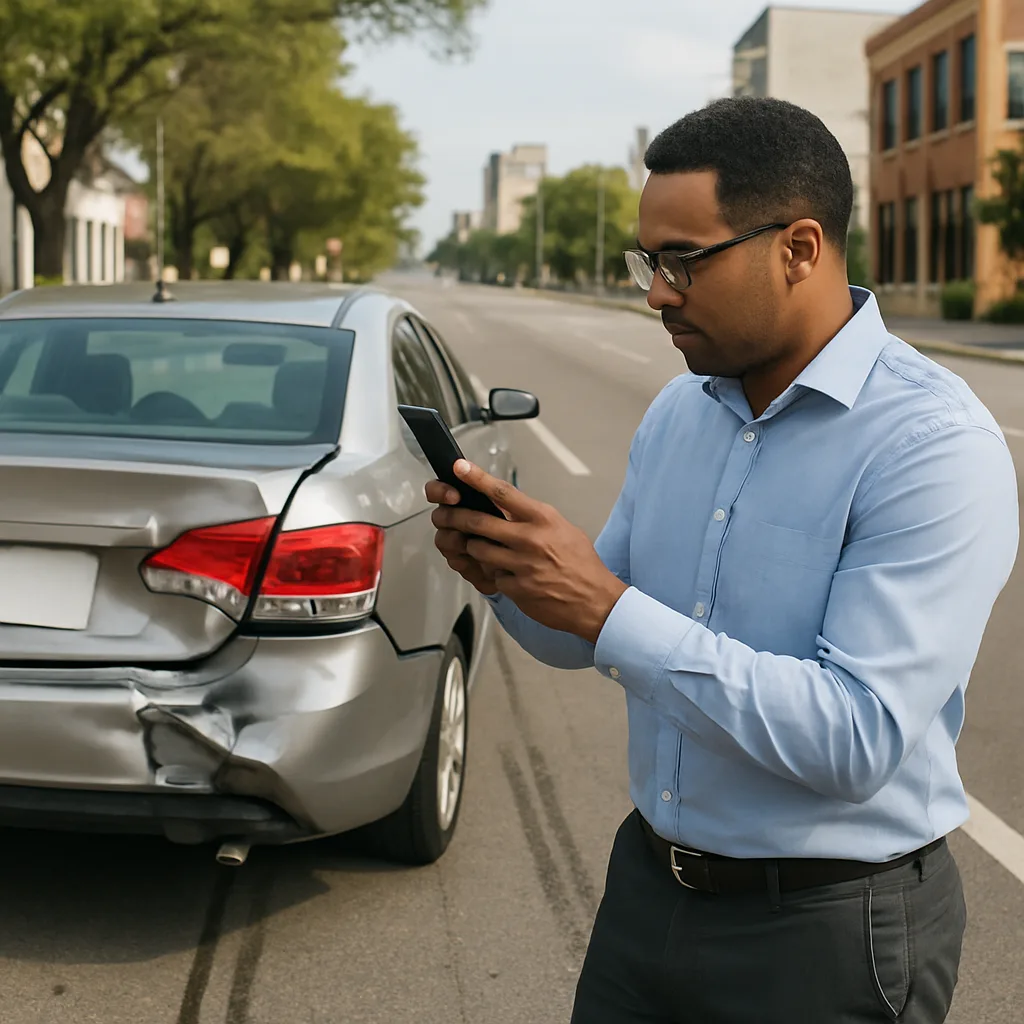
- Scene photographs and video. Capture vehicle positions, damage, lane markings, traffic signals, roadway debris, lighting, weather, and sight distance when it is safe to do so. Photograph the rear and front of the vehicles, including damage that may show whether there were several impacts.
- Witness information. Record names and contact details for people who saw the crash or its immediate aftermath. Ask witnesses what they observed without pressuring them to adopt a particular conclusion.
- Vehicle and repair evidence. Keep photographs taken before repairs, estimates, repair records, towing information, and any available inspection findings. Do not discard damaged parts that may help explain brake-light or impact issues without first considering whether they could be relevant.
- Official and electronic evidence. Keep the incident or crash report, identify nearby businesses or traffic cameras that may have captured the roadway, and preserve relevant dash-camera footage. Camera systems may overwrite recordings, so an attorney may advise on timely preservation requests depending on the circumstances.
- Insurance communications. Save letters, emails, claim numbers, recorded-statement requests, and messages exchanged with insurers. Avoid guessing about speed, distance, injuries, or fault when the facts are uncertain.
- Medical and loss records. Keep medical records, appointment information, medication receipts, wage documentation, and a factual symptom journal. A Jackson car accident claim guide offers additional practical information about protecting evidence after a disputed crash.
Injuries do not always appear immediately, and visible vehicle damage does not necessarily measure the seriousness of a person’s condition. Anyone experiencing pain, stiffness, headaches, or other symptoms may wish to seek medical evaluation. A record of when symptoms began and how they affect ordinary activities can help explain the injury timeline. Ballard Law also provides information about common whiplash symptoms after a rear-end crash. Medical decisions should be made with a qualified healthcare professional.
Frequently Asked Questions
Is the driver in the back always liable in a Mississippi rear-end crash?
No. The rear driver may face a strong negligence argument when evidence shows inadequate following distance, excessive speed, distraction, or failure to stop safely. However, liability depends on the complete set of facts. A sudden and unreasonable stop, unsafe lane change, defective or unlit brake lamps, or a multi-vehicle chain reaction may create a dispute about whether the front driver or another motorist also contributed.
What if both drivers give different accounts of the collision?
Conflicting statements do not automatically decide the claim. Insurers and attorneys may compare the accounts with photographs, damage locations, witness testimony, roadway conditions, vehicle data, crash reports, and available video. Avoid altering or deleting relevant messages, photographs, or recordings. Depending on the circumstances, a licensed Mississippi attorney may help evaluate which evidence is most useful and how comparative fault could affect the claim.
Can a traffic-camera recording prove who caused a rear-end accident?
Potentially, but not every camera records continuously or stores footage for the same period. A recording may show vehicle positions, traffic signals, lane movements, or the timing of a stop, but it may not capture every relevant detail. Nearby businesses, residences, and public agencies may have different preservation policies. An attorney can discuss evidence-preservation options based on the specific location and circumstances.
Should I document injuries even if my vehicle has little damage?
Yes, injury symptoms and vehicle damage do not always correspond in an obvious way. A person may experience delayed pain or stiffness after a collision, while a vehicle may sustain limited visible damage. Prompt medical evaluation and accurate records can help document the timing and nature of symptoms. Do not diagnose yourself or delay needed care based only on the appearance of the vehicle.
How Ballard Law Can Help
Ballard Law is dedicated to helping people in Jackson and throughout Mississippi evaluate disputed car accident claims. The firm can review the collision sequence, photographs, witness information, crash reports, insurance communications, and injury documentation to identify the issues that may affect fault and damages.
When the usual rear-end assumption is challenged, careful evidence review can be important. Ballard Law is committed to fighting for clients’ rights while explaining the legal process in clear, practical terms. The team is ready to evaluate your situation and discuss potential legal options. Contact Ballard Law for a free consultation or case evaluation.
The information in this article is for educational purposes only and does not constitute legal advice. Contact a qualified attorney licensed in Jackson, MS for advice specific to your situation.