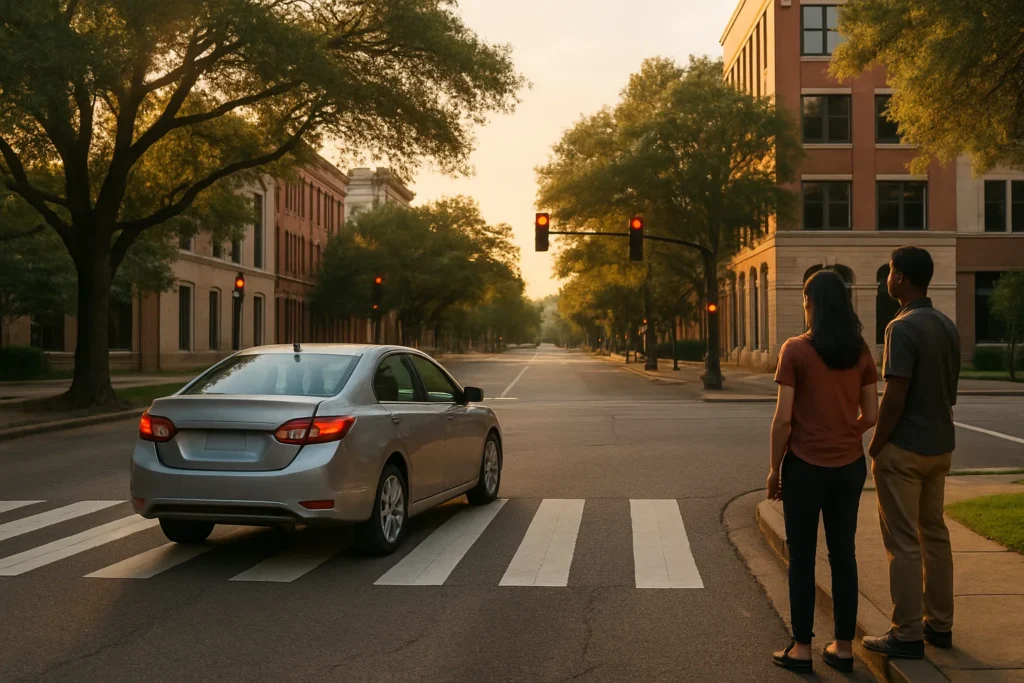
A pedestrian crash can leave a person and family trying to answer difficult questions at the same time: Who was responsible? What caused the impact? How will medical bills and lost income be handled? If you are searching for a pedestrian accident lawyer Jackson MS, understanding how responsibility is evaluated can help you recognize the information an attorney may need to review.
In Jackson, MS, a pedestrian injury claim may involve more than the driver’s version of events. Investigators may examine traffic signals, crosswalk markings, lighting, weather, vehicle damage, clothing, witness accounts, and the pedestrian’s actions. A roadway contractor, vehicle owner, employer, or another third party could also become relevant depending on the facts. Ballard Law can serve as a knowledgeable guide while an injured person considers the available legal options.
This article explains the major sources of potential responsibility, the evidence that may preserve important details, and practical issues to consider when dealing with insurers after a pedestrian crash. Mississippi law can be fact-specific, and responsibility may be divided rather than assigned to only one party.
Who May Be Responsible in a Jackson MS Pedestrian Accident?
Responsibility generally turns on whether a person or entity failed to use reasonable care and whether that failure contributed to the collision and resulting harm. A driver may be responsible for distraction, speeding, failing to yield where required, turning without checking for pedestrians, or driving while visibility is impaired. A traffic violation can be important evidence, but the claim still depends on the full circumstances.
Driver conduct and vehicle ownership
The person operating the vehicle is often the first potential source of liability. However, the vehicle’s owner may also matter if the owner carelessly entrusted it to an unsafe driver or if another legal relationship affects responsibility. If the driver was working at the time, the driver’s employer could become relevant, depending on employment facts and Mississippi law.
A pedestrian hit by a car in Jackson, Mississippi may also need to identify all applicable insurance policies. The driver’s policy is not always the only possible coverage. Household policies, employer coverage, or uninsured or underinsured motorist coverage may require separate analysis.
Pedestrian actions and shared responsibility
Pedestrians also have safety duties, such as using reasonable care and following applicable traffic controls. A claim is not necessarily barred simply because a pedestrian may have contributed to a crash. Mississippi generally recognizes comparative negligence concepts, meaning responsibility and damages may be affected by each party’s share of fault. The precise effect depends on the evidence and legal issues in the case.
How Do Roadway Conditions and Visibility Affect a Crosswalk Accident Claim?
A crosswalk accident claim may require looking beyond the driver and pedestrian. Poor lighting, obstructed sight lines, confusing signals, missing or faded markings, construction conditions, or a hazardous roadway design may have contributed to the event. These issues do not automatically establish liability, but they can make site evidence important.
In Jackson, MS, an investigation may involve the location of the crash, nearby businesses, traffic-control equipment, and the agency or entity responsible for maintaining the road. Jackson streets can differ significantly in lighting, traffic volume, sidewalks, and intersection design. Depending on the road involved, records from a local agency or the Mississippi Department of Transportation may be relevant. Government-related claims can involve special notice rules, deadlines, and defenses, so a licensed Mississippi attorney may need to assess that issue promptly.
Evidence that can clarify what happened
- The official crash report and any supplemental law-enforcement records.
- Photographs or video of the intersection, vehicle position, lighting, signals, crosswalk, and sight lines.
- Nearby security footage, traffic-camera footage, or doorbell-camera recordings, if available.
- Names and contact information for people who saw the impact or its immediate aftermath.
- The pedestrian’s clothing and shoes, preserved without washing or alteration when possible.
- Vehicle photographs, event-data information when available, and inspection or repair records.
- Weather, sunset, lighting, and roadway-condition information.
The value of evidence can decline quickly. Cameras may automatically overwrite footage, vehicles may be repaired, and road conditions may change. Photographs should show the broader setting as well as close details, without staging or moving objects to create a misleading impression.
What Should Injured Pedestrians Know About Proof and Insurance?
Medical documentation is a central part of many pedestrian injury claims. A person may experience pain or functional limitations that are not obvious at the scene. Medical professionals should make their own evaluation; injured people can help preserve the record by describing symptoms accurately, attending follow-up appointments as directed by their providers, and keeping records of bills, work absences, restrictions, and transportation costs.
Clothing and visibility issues can also become disputed. The actual weather, lighting, reflective material, roadway angle, and location of the pedestrian may matter more than assumptions made after the crash. Preserve the clothing and shoes in their post-crash condition, and keep photographs that show the scene at a similar time of day when safe and practical. Do not alter evidence to make it appear more or less visible.
Communicating with insurers
An insurance adjuster may ask for a recorded statement, medical authorization, photographs, or a quick settlement discussion. The adjuster’s role is to evaluate the claim for the insurer, not to act as the injured person’s legal representative. A careful approach generally includes:
- Keeping communications accurate and limited to known facts.
- Avoiding guesses about speed, distance, visibility, or fault.
- Saving letters, emails, claim numbers, and requests from every insurer.
- Not signing a release before understanding what claims and future issues it may affect.
- Discussing questions about statements, authorizations, or settlement offers with a licensed attorney.
A pedestrian accident lawyer Jackson MS may also review whether other policies, parties, or evidence sources should be investigated. The claim process can involve liability, medical records, damages, and coverage questions at the same time.
Frequently Asked Questions
Does a pedestrian always have the right of way in Jackson, MS?
Not in every situation. Right-of-way rules can depend on the location, traffic signal, crosswalk, roadway design, and actions of both the driver and pedestrian. Even when a pedestrian may have violated a traffic rule, that does not automatically resolve every negligence question. The evidence may show that more than one party contributed to the collision. A Mississippi attorney can evaluate the specific intersection and facts.
What if the driver left before police arrived?
A hit-and-run can make identification and insurance issues more complicated, but available evidence may still help. Witnesses, nearby cameras, vehicle fragments, photographs, and law-enforcement records could provide leads. Depending on the applicable policy language, uninsured motorist coverage may also become relevant. Because coverage rules and deadlines vary, an attorney may be able to review the available information and explain potential options.
Can a family member bring a claim for an injured pedestrian?
Usually, the injured person is the claimant for personal injury damages, but authority can change if the person is a minor, incapacitated, or deceased. A family member may also have separate rights in certain circumstances. Those issues depend on the person’s relationship, legal status, and the nature of the losses. A licensed Mississippi attorney can explain who may have standing based on the particular facts.
What if the pedestrian was not in a marked crosswalk?
Being outside a marked crosswalk does not automatically end the inquiry. Investigators may still examine the driver’s speed, attention, visibility, lane position, warnings, and opportunity to avoid the impact. The pedestrian’s location and conduct may affect comparative-fault analysis, but responsibility is determined from the complete evidence. Photos, witness accounts, video, and scene measurements may be especially important.
How Ballard Law Can Help
Ballard Law is dedicated to helping Jackson, MS, pedestrians and families understand the issues that may shape a personal injury claim. The firm can review available crash evidence, medical documentation, witness information, clothing and visibility questions, roadway conditions, and insurance communications. Its approach is focused on building an accurate picture of what happened while explaining legal options in understandable terms.
If you or a family member was injured in a pedestrian crash, contact Ballard Law for a free consultation or case evaluation. The team is committed to fighting for your rights and is ready to evaluate your situation without promising a particular outcome.
The information in this article is for educational purposes only and does not constitute legal advice. Contact a qualified attorney licensed in Jackson, MS for advice specific to your situation.