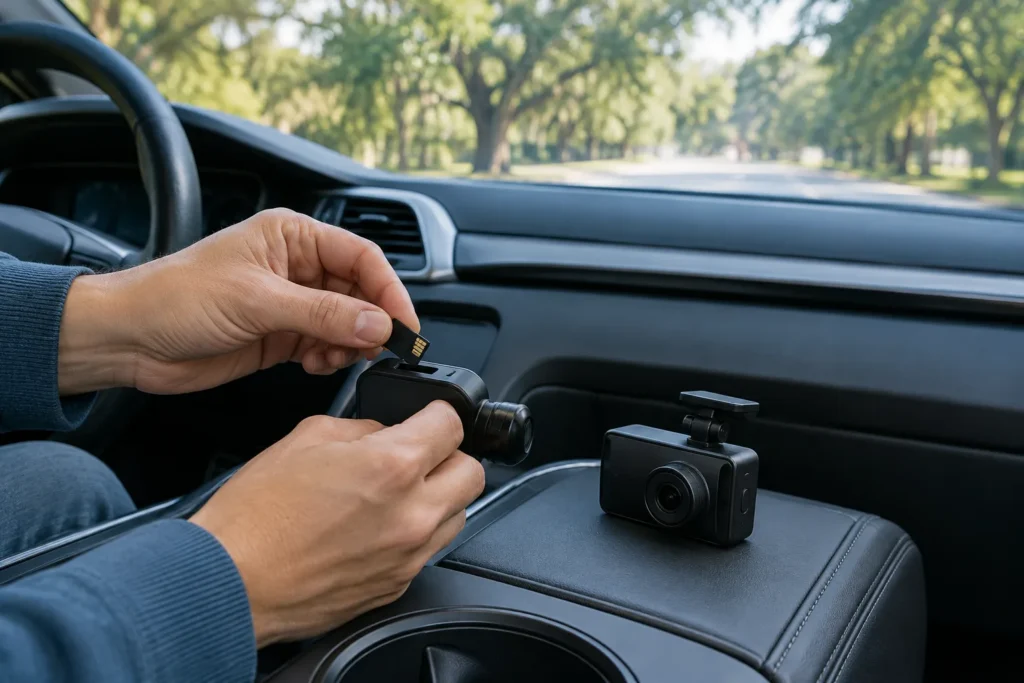
After a collision, a dashcam may have captured details that are difficult to recall later: the order of events, traffic conditions, or where vehicles were positioned. But many cameras record on a loop, meaning new video may eventually replace older files. If you are wondering when to preserve dashcam footage after a car accident in Jackson, MS, the practical answer is as soon as it is safe and feasible to do so. Ballard Law helps Jackson-area readers understand how evidence can fit into a personal injury claim, without treating any single recording as the whole story.
This guide explains how to protect the original file, create reliable backups, note timestamps and camera settings, and keep track of who receives a copy. It also covers why editing or posting footage publicly can create avoidable problems. A careful preservation process can help retain both the video and the information needed to understand how it was recorded.
When to Preserve Dashcam Footage After a Jackson, MS Collision
Preserve potentially relevant footage promptly after the collision, rather than waiting to see whether an insurer or another driver asks for it. Some dashcams overwrite the oldest recordings when their memory cards fill up; others save an event clip separately, but settings and device behavior differ. Do not assume a recording is protected just because the camera marked the event or displayed an alert.
Once immediate safety needs have been addressed, check the camera and its storage according to the manufacturer’s instructions. Avoid repeatedly using the camera or card if doing so may cause new recordings to replace the relevant clip. If you are unsure how the device stores or locks event files, consult its manual or a qualified technical professional before changing settings.
Preserve the original file and make backups
Keep the original recording in its native format when possible. Copy the relevant file to a secure device or storage location, and make a separate backup. Do not trim, rename, convert, enhance, or otherwise alter the original. If someone needs a viewing copy, keep it separate and clearly distinguish it from the untouched source file.
Capture the camera’s context
Record the date and approximate time of the collision, the camera make and model, relevant recording settings, and whether the device’s displayed clock appeared accurate. Note any time-zone or clock discrepancy rather than trying to correct the original file. These details can help explain what the footage shows and what it may not show.
How to Save Crash Footage Before It Is Overwritten
A simple preservation checklist can reduce the chance that an important clip disappears or loses its context. Depending on your device and circumstances, consider documenting these items:
- Originals: Keep the untouched source file and, if practical, the original memory card in a secure place.
- Backups: Make at least one separate copy. Record where each copy is stored and avoid relying on a single phone or memory card.
- Timestamps: Write down the collision time as you understand it, the camera’s displayed time, and any known difference between them.
- Settings: Note the camera model, date and time settings, loop-recording behavior, event-lock settings, and any relevant audio or recording options.
- Custody: List who has a copy, when it was shared, and how it was transferred. Keep a simple, factual transfer record.
- Related evidence: Preserve photographs, witness contact details, and other records that may help document the collision.
The video may be one part of a claim, alongside repair information, medical records, witness accounts, and insurer communications. The Jackson car accident claim guide explains broader claim considerations. If no officer’s report is available, dashcam video may sit alongside other ways to document a crash without a police report.
In Jackson, MS, a recording might show traffic movement on a local street or a highway approach, but the camera’s view can be limited. It may not capture what happened outside the frame, and a timestamp may not match the actual time. Preserve the recording as it exists instead of trying to make it appear clearer or more complete.
Common Dashcam Evidence Mistakes to Avoid
The aim is to preserve an accurate record, not to make a video appear more persuasive. Editing, adding captions, combining clips, or adjusting color and sound can change the original or raise questions about what was altered. Keep any viewing or working copy separate from the source, and make clear which is which. Avoid publicly posting the footage or discussing interpretations of it on social media; public sharing can expose private details and may remove context from the recording.
Do not assume that a clip proves fault by itself. A camera may miss a signal, an approaching vehicle, or the moments before impact. Whether a video helps clarify disputed events depends on its quality and how it fits with other evidence. For example, how evidence can affect fault in a Mississippi rear-end crash may involve more than a single camera angle.
If an insurer, another driver, or a lawyer requests a copy, keep a record of what was shared, with whom, and when. Do not delete other footage that may cover the moments before or after the collision. If audio is included, recording and privacy rules can vary by jurisdiction and circumstance; an attorney can discuss how those issues may apply. Mississippi law and procedures may differ from those elsewhere and may change over time, so avoid relying on a general online article as a legal conclusion.
Frequently Asked Questions
Can I use my phone to copy dashcam footage?
Often, a phone or computer can be used to copy a file, but the safest method depends on the camera and file format. Follow the manufacturer’s instructions and avoid recording over the card while trying to retrieve a clip. Keep the original file unchanged, make a separate backup, and note the method and date of transfer. If the process is unclear, seek technical help before experimenting with the source card.
Should I give the only copy to an insurance company?
Avoid making your only copy the one you provide to anyone. Keep the original secure and make a separate copy for sharing when appropriate. Record what you sent, the recipient, and the date. Whether and how to respond to a particular request depends on the circumstances of the claim; a Mississippi attorney can explain considerations that may apply to your situation.
What if the video has the wrong date or time?
Do not change the timestamp embedded in or displayed by the original recording. Instead, make a separate note describing the apparent discrepancy, such as a camera clock that was not set correctly. Preserve the camera settings and any relevant device information too. That context can help someone reviewing the file understand its limitations without altering the original evidence.
Does dashcam footage automatically prove who caused a Jackson crash?
No. Footage can offer useful information, but it may show only one angle or a portion of the events. Other evidence, including witness accounts, photographs, and the physical circumstances of the collision, may also matter. In a Jackson, MS claim, the significance of a recording depends on the specific facts and how the available evidence fits together.
How Ballard Law Can Help
Preserving footage is a practical first step, but understanding how it fits into a larger injury claim can involve questions about context, other records, and communications with insurers. Ballard Law is dedicated to helping people in Jackson, MS understand their options after a collision and is committed to fighting for clients’ rights. The firm can evaluate how dashcam footage and other available information may relate to your circumstances; no single piece of evidence guarantees a particular result. If you have questions about a crash-related injury claim, contact Ballard Law to request a free consultation or case evaluation.
The information in this article is for educational purposes only and does not constitute legal advice. Contact a qualified attorney authorized to practice in the jurisdiction that applies to your matter for advice specific to your situation.