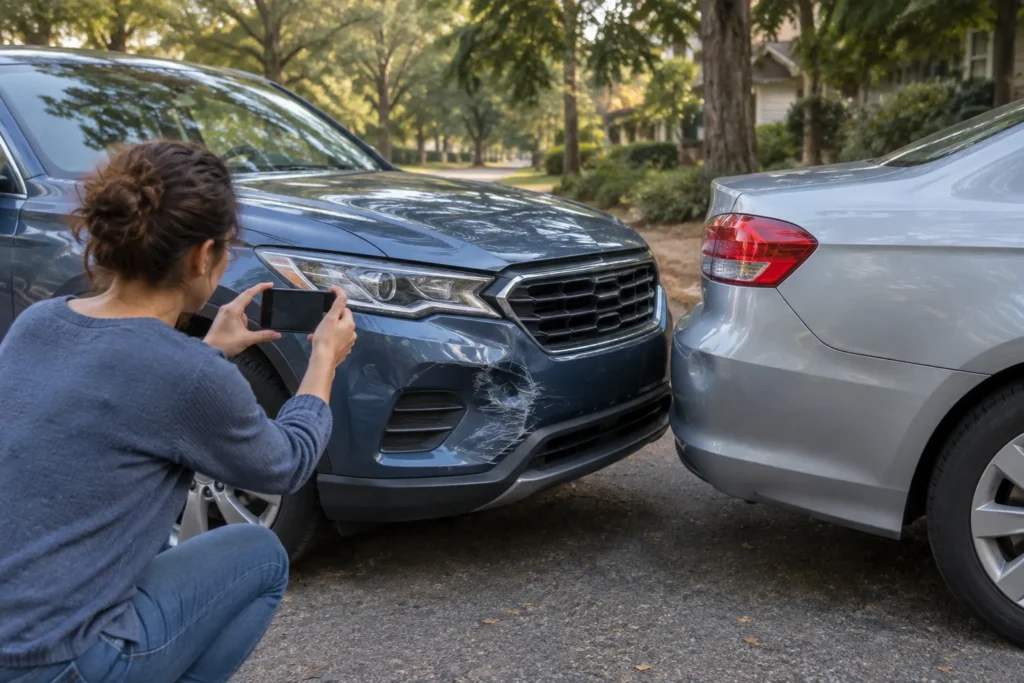
A collision can leave you with questions before you have all the paperwork. Maybe no officer came to the scene, or you expected a report but cannot locate one. If you are considering a car accident claim without a police report in Jackson, MS, the absence of that document does not automatically mean there is no claim. A report can be useful, but it is only one potential source of information about a crash.
The practical task is to preserve other evidence and find out whether a report was created. Ballard Law can help readers understand the kinds of records that may matter and how they fit into a claim. This guide covers alternative evidence, ways to check with the responding agency, and steps for keeping documents and insurer communications organized.
Can a car accident claim without a police report in Jackson, MS be supported by other evidence?
A police report may record basic details, such as the time and location of a collision, the people involved, and an officer’s observations. But a claim may also be evaluated using evidence gathered by drivers, witnesses, medical providers, and insurers. The absence of a report can make some facts harder to verify, especially if accounts differ, but it does not itself establish who was at fault or whether an injury occurred.
What evidence can help show what happened?
When it is safe and appropriate to do so, useful records may include:
-
Photos or video of vehicle positions, damage, the surrounding roadway, and relevant conditions. Keep original files when possible, with the date and source information intact.
-
Names and reliable contact details for witnesses, along with a brief note about what each person saw. Avoid coaching witnesses or asking them to adopt a particular version of events.
-
Vehicle repair estimates, inspection records, and photographs taken before repairs. These may help document damage, but damage alone may not establish how a crash occurred.
-
Your own factual notes about the sequence of events, made as soon as reasonably possible. Distinguish what you remember from what you later learned.
These materials can support different parts of a claim; proving that a collision occurred is not necessarily the same as establishing responsibility, injury, and loss. For more context on the elements a personal injury claim must establish, consider how each item relates to the specific facts rather than treating any single record as decisive.
How can you check whether a Jackson-area crash report is available?
If no report was given to you at the scene, it may still be worth checking whether one was created. Start by identifying which agency may have responded. Depending on the location and circumstances, that could be the Jackson Police Department, the Hinds County Sheriff’s Office, or the Mississippi Highway Patrol. The agency responsible for the roadway or incident may not be obvious, so confirm rather than assume.
When contacting an agency, ask whether it has a report associated with the collision and what information it needs to search. Details that may help include the crash date and approximate time, location, names of involved people, and any incident or event number you received. Ask how reports are requested, whether there is a fee, and whether the report is ready. Availability and procedures can vary by agency and may depend on the circumstances.
If an initial search finds nothing, check that the date, location, and agency are correct. A report may not have been made, or it may not yet be available. Keep a note of whom you contacted, when, and what you were told. Do not alter your account or wait on an uncertain report before preserving other evidence. In Jackson, MS, agency boundaries and the exact crash location can affect where a record may be held, so documenting your inquiries can help keep the search organized.
What should you preserve while a report is missing?
A useful record is organized, dated, and based on what you actually know. Keep copies of the evidence in one place and note when each item was created or received. If more than one person has information, record their names and contact details separately from your own recollection. Avoid editing original photographs or deleting messages that relate to the collision.
Keep medical and financial records together
Save visit summaries, bills, prescriptions, and other treatment records related to care after the crash. Keep copies of communications about who may pay those bills, too. These records document treatment and expenses, not necessarily how the collision happened. For additional information about how medical bills may be handled after a Jackson car crash, see the firm’s related guide.
If the crash affected your work, keep pay records, schedules, employer communications, and documentation of missed time or reduced earnings. Different work arrangements may call for different records. This guide to records that can support lost wages after a Jackson car wreck discusses examples of income documentation.
Track communications with insurers
Keep copies of claim forms, emails, letters, and messages, and note the dates and names associated with calls. Ask how an insurer wants supporting materials submitted and retain copies of what you send. An insurer may have its own claim procedures, and the information it requests can vary. A missing report does not mean you should guess at facts or describe uncertain details as definite. For a broader overview of a broader guide to Jackson car accident claims, see Ballard Law’s related resource.
Frequently Asked Questions
Can a witness statement substitute for a police report?
A witness account can be one piece of evidence, but it is not automatically a substitute for an official report or proof of every part of a claim. Its value may depend on what the witness personally observed, how specific the account is, and whether other information supports or conflicts with it. Keep contact details and any original written messages, and avoid asking a witness to speculate.
What if the other driver disputes how the collision happened?
Different accounts can make independent details more important. Photos, vehicle damage records, witness observations, and your contemporaneous notes may help clarify what is agreed and what remains disputed. Preserve original material and separate direct observations from assumptions. An insurer or attorney may assess the evidence in context; no single item necessarily resolves a disagreement about responsibility.
Can I request a report days after the crash?
You can ask the agency that may have responded whether a report exists and how to request it, even if some time has passed. The process, required information, and availability depend on the agency and circumstances. If you are unsure which agency handled the event, provide the location and date and ask where to direct your inquiry. Continue keeping other records while you check.
Does a missing report mean the insurer will deny my claim?
Not automatically. Insurers may review other available information, but their requirements and evaluation depend on the policy, facts, and claim. A report’s absence can leave questions that other evidence may help address. Ask the insurer what documentation it is seeking, keep a record of the response, and avoid assuming that a claim will be approved or denied based only on whether a report exists.
How Ballard Law Can Help
When a crash report is unavailable, sorting out which records matter and what questions remain can feel difficult. Ballard Law is dedicated to helping people understand the evidence that may support a personal injury claim, including photographs, witness information, treatment records, financial documentation, and insurer communications. The firm can evaluate how the available information relates to the circumstances of a collision in Jackson, MS and discuss possible next steps based on the facts. Contact Ballard Law to request a free consultation or case evaluation.
The information in this article is for educational purposes only and does not constitute legal advice. Contact a qualified attorney licensed in Mississippi for advice specific to your situation. Laws and procedures vary by location and may have changed since publication.