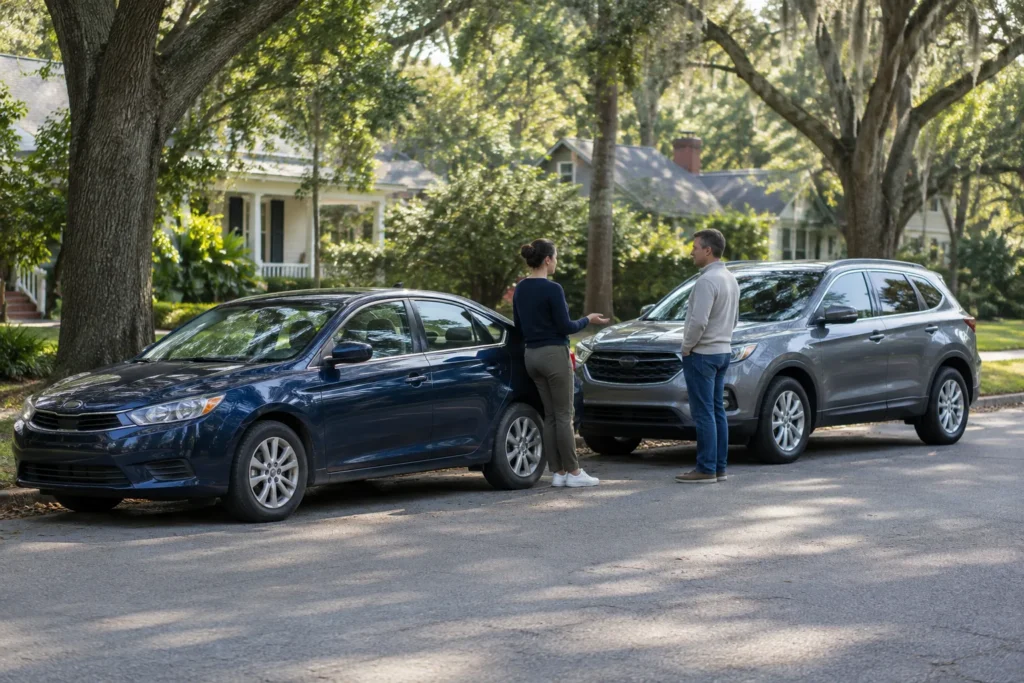
A crash in a borrowed car can leave an injured person wondering whether the vehicle owner’s insurance, the driver’s policy, or another policy may apply. For a borrowed car accident insurance claim in Mississippi, the answer can depend on who owned the vehicle, who was driving, what permission the owner gave, and the language in each policy. Ballard Law helps Jackson-area readers understand the coverage questions that may arise after a collision. How family relationships can affect a Jackson passenger claim can also matter when an injured passenger is related to the driver or owner.
This guide explains how to identify the relevant policies, what details about permission may matter, and which records can help clarify coverage. It also discusses options that may be worth checking if the at-fault driver has no insurance or not enough. Insurance terms and claim procedures can vary, and applicable laws may change, so an initial assumption about “whose insurance” applies is not a final coverage decision.
How a borrowed car accident insurance claim in Mississippi may be evaluated
When a crash involves a borrowed vehicle, the owner’s policy is often an important starting point, but it is not possible to determine coverage from ownership alone. The insurer may review whether the driver had permission, whether the trip stayed within the permission given, and whether an exclusion or other policy term affects coverage. The specific wording of the policy matters.
Permission and the way the car was used
Permission may be express, such as an owner handing over the keys, or it may be established by the surrounding circumstances. Questions can arise if the driver used the car for a purpose the owner did not approve, lent it to someone else, or continued using it after permission ended. Those details do not automatically resolve coverage; they are facts an insurer may investigate alongside the policy language.
In a Jackson, MS borrowed vehicle accident, it can help to distinguish the person who owns the car from the person who regularly uses it. A borrowed vehicle is also different from a rental or employer-provided car, which may involve separate contracts or coverage arrangements. Avoid treating general descriptions of “permissive use” as a guarantee that a particular claim is covered.
The driver’s own policy may also be relevant
The driver’s personal auto policy may provide coverage for some use of a non-owned vehicle, but terms vary. Some policies have limits, conditions, or exclusions involving vehicles available for regular use. The driver’s insurer and the vehicle owner’s insurer may each need to review the facts before their roles are clear.
Which policies and records may matter after a borrowed-car crash?
A coverage review often involves more than locating one insurance card. The vehicle owner’s liability policy may be considered, and the driver’s policy may also be relevant depending on its terms. If the injured person was a passenger, that person’s own auto policy may offer additional coverage in some circumstances. Medical-payments coverage, if included in an applicable policy, may help with certain covered medical expenses regardless of fault, subject to its terms.
If the at-fault driver is uninsured or has insufficient coverage, uninsured or underinsured motorist coverage may be worth investigating. Whether it applies can depend on policy definitions, the injured person’s relationship to the insured, and the facts of the crash. Ballard Law discusses steps for exploring uninsured or underinsured motorist coverage in Jackson. The amount available is a separate question from whether a policy may apply; see how Mississippi crash policy limits can shape a claim.
Useful information to gather may include:
- The names and contact details of the vehicle owner, driver, passengers, and any witnesses.
- The vehicle identification and insurance information for the borrowed car and any other vehicles involved.
- The owner’s account of who gave permission, when it was given, and any limits placed on the vehicle’s use.
- Available policy declarations, insurance cards, and claim correspondence, while recognizing that an insurance card alone does not show every term or limit.
- The crash report or other records from the agency that investigated, photographs, and available repair estimates.
- Medical bills, payment records, health insurance explanations of benefits, and related correspondence. These records that help document who pays medical bills after a Mississippi crash can help keep expenses and payments organized.
Jackson-area crashes may be investigated by different agencies depending on where the collision happened. Keep the report number and identify which agency prepared any report; do not assume a report will decide insurance coverage or fault.
What to clarify before assuming coverage applies
A well-organized account can help insurers evaluate the claim, but it is important to separate known facts from guesses. Write down the vehicle’s owner, who had the keys, the reason for the trip, where it was headed, and whether the owner set any conditions. Preserve messages or other communications about borrowing the car. If accounts differ, note that rather than trying to make the details fit a single version.
Before discussing the claim with an insurer, it may be useful to identify which company and policy the conversation concerns. Keep copies of letters, emails, and claim numbers. If asked about an event you do not remember clearly, avoid guessing. These are questions to consider before giving an insurer a recorded statement; what to say can depend on the circumstances and the policy involved.
A few common assumptions can create confusion:
- “The owner’s insurance always pays.” Coverage depends on policy language, permission, exclusions, and the facts.
- “The driver’s policy cannot matter.” A driver’s policy may contain coverage for some non-owned-car situations, subject to its terms.
- “One insurance card answers every question.” It identifies an insurer but may not show all coverages, limits, exclusions, or who qualifies as an insured.
- “A passenger has no policy to check.” A passenger’s own auto policy or other applicable coverage may be relevant. Family relationships can affect the analysis, as explained in how family relationships can affect a Jackson passenger claim.
For an injured person in Jackson, Mississippi, getting the basic facts and documents together can help identify which insurers should be asked to review the claim. It does not establish that any particular policy will pay, or how much coverage is available.
Frequently Asked Questions
Does the car owner’s insurance usually cover an accident in a borrowed car?
The owner’s policy is often an important policy to review, but coverage is not automatic just because the vehicle belongs to the owner. The insurer may examine whether the driver had permission, whether the use fit that permission, and whether policy terms or exclusions apply. Other policies may also be relevant. The actual policy language and facts determine what coverage may be available.
Can my own insurance apply if I was driving someone else’s car?
Possibly. A driver’s personal auto policy may provide some coverage while the driver uses a non-owned vehicle, but terms and exclusions differ. For example, the policy may treat a vehicle available for regular use differently from a car borrowed once. The vehicle owner’s policy and the driver’s policy should be reviewed rather than assuming either one controls.
If I was a passenger, can my own auto policy matter?
It may. Depending on the policy and circumstances, a passenger’s own coverage could include medical-payments or uninsured or underinsured motorist benefits. The passenger’s relationship to the driver or vehicle owner may also be relevant to policy definitions. A passenger does not need to be the person who borrowed the car for their own policy to be worth checking.
What if the borrowed car’s owner says the driver did not have permission?
That disagreement may make the facts and policy wording especially important. Relevant details can include how the driver obtained the keys, any messages about the trip, prior use, and limits the owner communicated. An insurer may investigate those facts, but a disagreement alone does not determine whether coverage exists. Keep available communications and describe what is known without speculating.
How Ballard Law Can Help
Sorting out insurance after a borrowed-car crash can involve several people, policies, and versions of how the vehicle was being used. Ballard Law is dedicated to helping injured people understand the questions that may affect a Mississippi claim, including permission, available coverage, policy limits, and documentation. The firm can review the circumstances and help explain options without assuming that a particular insurer must provide coverage. If you were hurt in a borrowed vehicle in Jackson or elsewhere in Mississippi, contact Ballard Law to request a free consultation or case evaluation.
Legal disclaimer: The information in this article is for educational purposes only and does not constitute legal advice. Laws vary by location and may change; contact an attorney licensed to practice in Mississippi for advice specific to your situation.