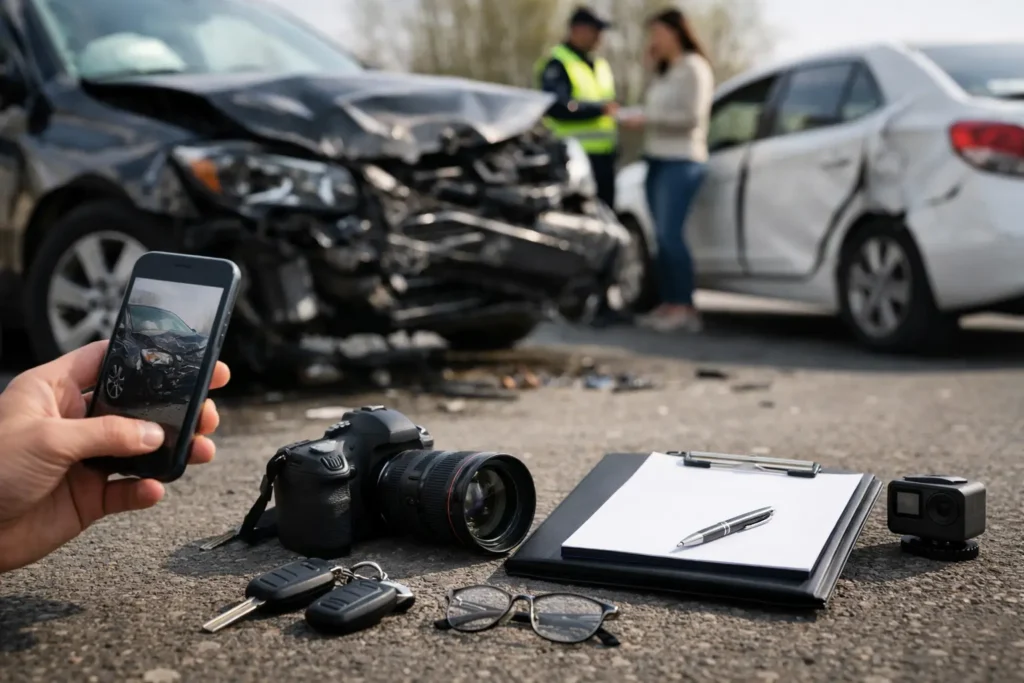
A wreck can turn into an argument before the vehicles are even towed away. The other driver may deny running a light. An insurance adjuster may question the force of the impact. Days later, a witness may no longer answer the phone. The best evidence after a car wreck is the evidence gathered early, before memories change, footage disappears, and the insurance company starts building its version of events.
If you are hurt, your safety and medical care come first. But when you are able, or when someone you trust can help, preserving the right information can make a real difference in whether an insurer accepts responsibility or tries to shift blame onto you.
What Makes Evidence Strong After a Collision?
Strong evidence does more than show that a collision happened. It helps answer the questions insurers and juries actually ask: Who caused it? How hard was the impact? What injuries followed? What has the crash cost the injured person and family?
The most useful proof usually comes from several sources that support one another. A photo of a crushed door, a police report noting the point of impact, an independent witness, and prompt medical records can tell a far more persuasive story together than any one item can alone.
Evidence also needs to be reliable. A timestamped photograph taken at the scene generally carries more weight than a recollection written down weeks afterward. That does not mean later evidence is worthless. It means delay gives the other side more room to challenge it.
The Best Evidence After a Car Wreck Starts at the Scene
Photos and video that show the full picture
If it is safe to do so, take wide photos and video before the vehicles are moved. Capture the position of each vehicle, skid marks, debris, broken glass, traffic signals, road signs, lane markings, weather conditions, and anything blocking visibility. Then take closer photos of the damage to every vehicle involved.
Do not focus only on the damage to your car. Photograph the other driver’s vehicle, nearby intersections, and any commercial vehicles involved. A wide-angle image may show that a driver crossed a center line, failed to yield, or entered an intersection from the wrong lane.
Photograph visible injuries as well, including bruising, cuts, swelling, and burns. Continue taking photos as injuries develop. Bruises and swelling can become more apparent in the days after a crash, and a visual record can help show the physical effects of the collision.
Driver and insurance information
Exchange names, contact details, driver’s license information, license plate numbers, and insurance information. If the other driver is working, driving a company vehicle, or making a delivery, document the employer name and vehicle markings. Those details may matter later when determining every party responsible for the harm.
Avoid arguing about fault at the scene. A calm exchange of information is enough. Statements made while you are shaken, in pain, or unsure of what happened can be misunderstood and used against you later.
The police report
Call law enforcement after a collision involving injuries, significant vehicle damage, suspected impairment, or a disagreement about what occurred. The responding officer may document statements, road conditions, vehicle locations, citations, and observations made immediately after the wreck.
A crash report is valuable, but it is not always the final word. Officers may arrive after vehicles have moved, and reports can contain errors or omissions. Treat the report as one important piece of the case, not the only proof worth preserving. If a report gets key facts wrong, other evidence may help correct the record.
Witnesses and Video Often Decide Disputed Fault
An independent witness can be especially powerful when drivers tell conflicting stories. Ask witnesses for their names and phone numbers. If they are willing, ask what they saw and make a brief note of it while the details are fresh. Do not pressure them or coach their account. Honest, independent testimony is what gives a witness value.
Video can be even more time-sensitive. Nearby businesses, homes, traffic cameras, dashcams, and doorbell cameras may have captured the crash or the moments leading up to it. Many systems automatically overwrite recordings within days or weeks. A business owner may be helpful, but they are not required to preserve footage simply because someone asks informally.
That is why prompt legal action matters. An attorney can identify potential video sources and send preservation requests before critical footage is erased. The same urgency applies to commercial truck crashes, where electronic logging data, onboard camera footage, dispatch records, maintenance files, and vehicle inspection records may become central evidence.
Medical Records Connect the Wreck to Your Injuries
Insurance companies commonly attack injury claims by arguing that treatment was delayed, pain came from a prior condition, or the crash was too minor to cause real harm. Prompt medical evaluation gives you care when you need it and creates a record connecting your symptoms to the collision.
Tell your medical provider about every symptom, even if it seems minor at first. Headaches, neck stiffness, dizziness, numbness, sleep problems, and emotional distress may not appear dramatic in the emergency room, but they can affect your ability to work and function. Follow the recommended treatment plan, attend appointments, and keep copies of discharge papers, prescriptions, therapy records, imaging results, and medical bills.
Preexisting conditions do not automatically defeat a claim. A wreck can worsen an old injury or cause new symptoms. The key is honest documentation and medical evidence showing what changed after the collision.
Keep the Financial Evidence, Too
Your claim is not limited to a repair estimate. Save proof of every loss caused by the wreck. This includes towing and rental expenses, vehicle repair records, medication receipts, mileage to medical appointments, missed-work documentation, and pay records showing lost income.
If injuries keep you from doing your usual job, ask your employer for a written statement of missed time, reduced hours, or lost opportunities. Self-employed workers should preserve invoices, appointment calendars, tax records, and communications showing work they could not perform. The loss is still real just because it does not appear on a standard timecard.
Keep a simple injury journal as well. Write down pain levels, missed family events, interrupted sleep, mobility problems, and tasks you need help completing. It should be truthful and specific, not exaggerated. A consistent record can explain the human impact that medical codes and billing statements do not capture.
Evidence That Can Hurt Your Claim
The insurance company will search for gaps and inconsistencies. Do not give it unnecessary material. Avoid posting about the wreck, your injuries, or physical activities on social media while a claim is pending. A single photo taken out of context can become an argument that you were not hurt as badly as you reported.
Be cautious about recorded statements to the other driver’s insurer. Adjusters may sound sympathetic, but their job is to protect the company’s bottom line. You can report the basic facts of the crash to your own insurer, but you do not have to guess about injuries, accept blame, or agree to a recorded statement before you understand your rights.
Do not repair, sell, or dispose of your vehicle until it has been thoroughly photographed and, when needed, inspected. The damage pattern can reveal important facts about speed, angle of impact, seat-belt use, and the force of the collision. If the vehicle must be moved or repaired, keep every estimate, invoice, and photograph.
How a Car Wreck Lawyer Preserves Proof
A serious injury claim requires more than sending medical bills to an insurer. It may require securing video, interviewing witnesses, reviewing the crash report, examining damaged vehicles, obtaining phone or business records, and identifying all available insurance coverage. The sooner that work begins, the better the chance of finding evidence before it disappears.
At Ballard Law, attorney William E. Ballard approaches accident cases with urgency because insurers do not wait around to protect an injured person’s claim. A lawyer can take over insurance communications, demand preservation of critical records, and build the evidence needed to pursue the compensation you deserve.
What to Do in the Days After the Wreck
Get medical care, follow up as symptoms develop, and create one place to keep every document related to the collision. Save photos and original videos without editing them. Write down what you remember, including the time, location, direction of travel, weather, and anything the other driver said. Then act quickly to protect video footage and other evidence that may be outside your control.
You do not have to have every answer before asking for legal help. A prompt conversation can help protect the proof that tells your side of the story while you focus on getting better.