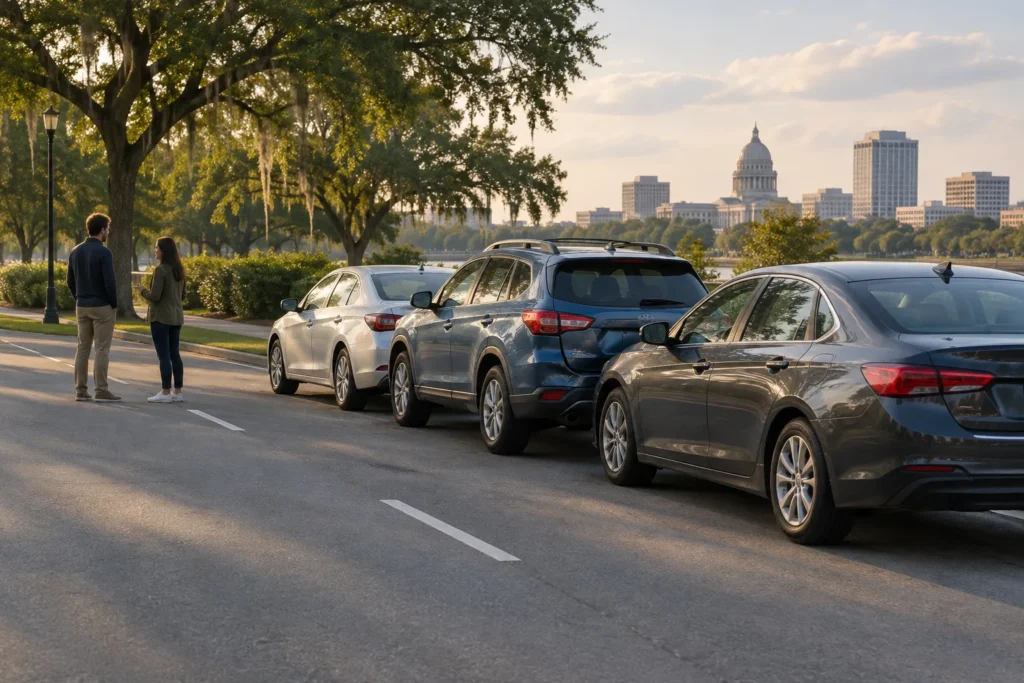
A driver slows for traffic, gets hit from behind, and is then pushed into the vehicle ahead. In a Jackson, MS pileup, that sequence can raise questions that a single-collision account may not answer: which impact caused which damage, when did symptoms begin, and what did each driver have a chance to see or avoid? A multi-car accident claim in Jackson, MS may therefore require examining the separate contacts within the larger crash. Ballard Law helps readers understand the evidence and questions that can matter without assuming that one account settles the facts. This guide explains how investigators may assess the order of impacts, connect damage and reported injuries to particular collisions, and consider witnesses, video, and insurance issues. Preserving a clear timeline can be useful because vehicles may be moved and memories can change after a stressful event. The process is fact-specific, and evidence may be incomplete.
How a Multi-Car Accident Claim in Jackson, MS Separates Each Impact
A pileup is a connected event, but it may include several distinct collisions. For example, one vehicle may strike another, which may then be pushed into a third car. Or a driver may make a separate maneuver after the first collision. Evaluating each impact means considering the order, direction, and circumstances of those contacts rather than assuming every vehicle was involved in the same way.
Reconstructing the sequence
Investigators may compare accounts from drivers and passengers with physical evidence. Relevant details can include where vehicles came to rest, the direction and location of visible damage, debris, roadway conditions, and any available photographs or video. No single clue necessarily establishes the full sequence; evidence is considered together and may support different interpretations.
A witness may have seen the first collision but not what happened moments later. A camera may show the overall traffic flow while leaving a particular impact obscured. A careful review can identify what the evidence does and does not show. For a broader look at investigating a chain-reaction crash in Jackson, see how accounts, vehicle damage, and roadway evidence may fit together.
What damage can—and cannot—show
Damage patterns may help identify contact points or distinguish impacts, but photos alone do not always establish speed, fault, or the precise cause of an injury. The condition of each vehicle, the positions of other cars, and the timing described by witnesses can provide context. In Jackson, MS, as elsewhere, conclusions depend on the available evidence and the particular crash circumstances.
What Evidence Helps Connect Impacts, Injuries, and Responsibility?
A useful record can capture more than the final position of the vehicles. If it is safe and practical, scene photographs may show vehicle locations, damage from more than one angle, roadway conditions, and debris before cars are moved. Contact information for witnesses can help preserve observations that may not appear in a report. Available dashcam or nearby-camera footage may also help establish timing, though it can be incomplete or unavailable.
If no police report is available, other records may still help describe what happened. This guide explains options for documenting a Mississippi crash when no police report is available. A report can be useful, but it is not necessarily a final determination of civil responsibility. Records, photographs, witness accounts, and other evidence may need to be reviewed together.
Injury evaluation involves its own timeline. A person may report discomfort immediately, later, or after an initial medical assessment. Recording when symptoms began and how they changed can help a medical provider understand the history; it does not by itself prove which impact caused a condition. For more context on delayed pain after a Jackson car wreck, consider how a symptom timeline may be documented and discussed with a provider.
A claim review may compare reported symptoms and available medical records with the impact sequence and other facts. Medical providers—not claim reviewers—evaluate health concerns. Keeping descriptions accurate and consistent can help avoid confusion, especially when a person experienced more than one jolt in a short period.
Why Responsibility and Insurance May Differ Across the Chain
Responsibility in a multi-vehicle crash is not always all-or-nothing. One driver’s actions may have contributed to the initial collision, while another event or response may have played a role in a later impact. The evidence may also leave genuine disputes about timing, visibility, stopping distance, or whether a collision could have been avoided. Mississippi law governs claims arising in Jackson, but how legal principles apply depends on the facts and may change over time.
A review may ask, for each collision:
- Which vehicles made contact, and in what order?
- What actions or conditions may have contributed to that impact?
- Which damage and reported symptoms are associated with it?
- Are there witnesses, photographs, recordings, or records that clarify the sequence?
Those questions can matter when evaluating how shared fault can affect a Jackson car crash claim. The assessment should not assume that every driver shares responsibility equally or that one driver caused every impact. The available evidence and applicable Mississippi law matter.
Insurance questions may also extend beyond one vehicle or one claimant. Identifying which vehicles and impacts are involved can help clarify which policies may need to be considered. If several people are injured, coverage limits can become relevant; see how multiple injury claims may share one Mississippi policy. Policy terms, the number of claims, and the facts of the crash can affect the analysis. A claim’s value or coverage cannot be determined from the number of vehicles alone.
Frequently Asked Questions
Does every vehicle in a pileup automatically share fault?
No. Being part of a chain of collisions does not, by itself, establish that a driver caused or contributed to every impact. The sequence, conduct, road conditions, and other evidence may be evaluated for each collision. In a Jackson claim, responsibility depends on the facts and applicable Mississippi law. Different drivers may have different roles, and available evidence may not answer every question conclusively.
Can photographs show which impact caused my vehicle’s damage?
Photographs can document visible damage and vehicle positions, which may help distinguish contact points or support a timeline. They do not always establish when damage occurred, how a collision happened, or whether a particular impact caused an injury. Investigators may compare photos with witness accounts, video, vehicle condition, and other records. The usefulness of any image depends on what it captures and the surrounding evidence.
What if I noticed symptoms after leaving the crash scene?
Symptoms may not be apparent at the scene, and their timing is one part of the information a provider may consider. A person can record when symptoms began and describe the sequence of impacts as accurately as possible when discussing the event with a medical provider. This article does not diagnose injuries or recommend treatment. The relationship between a symptom and a particular impact is fact-specific.
What if no one saw the first collision?
A lack of an eyewitness does not necessarily mean there is no evidence. Vehicle damage, final positions, roadway conditions, photographs, recordings, and accounts from people who saw later events may help inform a reconstruction. Evidence may be incomplete, and some details may remain uncertain. In Jackson, records from responding agencies may also be relevant, but they should be considered alongside other available information.
How Ballard Law Can Help
Ballard Law is dedicated to helping people understand the issues that can arise after a multi-vehicle collision. A review may consider the order of impacts, available photographs or video, witness information, reported symptoms, and potential insurance questions. The firm is committed to fighting for clients’ rights while recognizing that each crash and claim depends on its own evidence. If you were involved in a pileup in Jackson, MS, contact Ballard Law to discuss your situation and request a free consultation or case evaluation.
The information in this article is for educational purposes only and does not constitute legal advice. Contact a qualified attorney authorized to practice in the jurisdiction that applies to your matter for advice specific to your situation.